How a Fortnite Bronze to Unreal Ranked Speedrun Works in Fortnite Reload
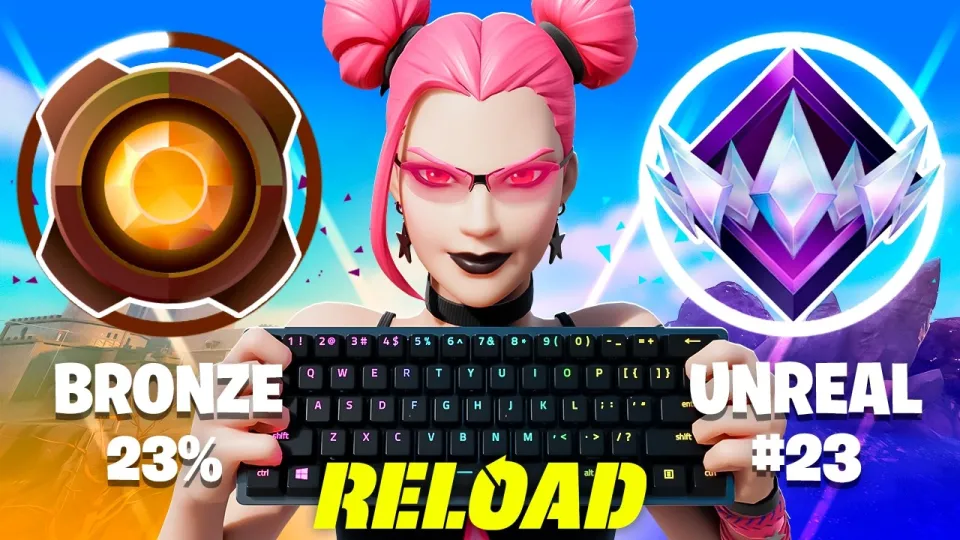
Video: BRONZE To UNREAL Ranked Speedrun In Fortnite Reload!
Need articles like this for your video? They help promote it on YouTube and Google — order them in the Telegram bot @sat_sit_bot. The bot writes and publishes the articles itself (with your YouTube video embedded) on popular topical websites (no ads). Your first 50 articles are free.
· based on the channel HaloBT
A Fortnite Bronze to Unreal ranked speedrun is a single continuous climb through every ranked tier — Bronze, Silver, Gold, Platinum, Diamond, Elite, Champion and finally Unreal — without resetting progress or swapping accounts. HaloBT's run does it in Fortnite Reload, the faster-paced mode where matches end sooner and rank points move in bigger swings. The creator's practice maps, including an aim and edit course, are listed under the MoreHaloBT Fortnite creator page.
What a Bronze to Unreal climb actually requires
Ranked progression in Fortnite is not a straight line of wins; it is a points economy where placement, eliminations and survival time all feed the same counter. Climbing from Bronze to Unreal in one session demands three things at once: consistent early-game survival, enough eliminations to keep the points-per-match rate above the rank's decay threshold, and a queue that fills quickly so downtime stays near zero. Reload helps with the last part because matches are shorter and lobbies refill fast, which is exactly why speedrunners prefer it over standard Battle Royale for this format.
The lower tiers — Bronze, Silver and the start of Gold — are forgiving. Most players move through them on placement points alone, and a single strong match can jump multiple divisions. The real cost begins in Platinum, where the points required per division rise and a bad drop can erase two good games.
How Reload changes the pace of the run
Fortnite Reload compresses the match into a tighter cycle of fights, so the speedrun is less about surviving to the final circles and more about winning repeated mid-game engagements. That changes the maths: a player who averages a handful of eliminations per match will out-earn a passive player who simply places well, because Reload gives more opportunities to bank elimination points before the lobby thins out.
The trade-off is variance. Shorter matches mean shorter recovery windows, and an early elimination in Reload costs a disproportionate share of the match's total points. Speedrunners counter this by treating the first drop as the highest-risk moment of the game and choosing landing spots that guarantee a weapon before a fight.
Solo queue versus duo fills for a speedrun
Solo queue is the purest version of the challenge and the one most speedrunners attempt first, because nothing in the result depends on a teammate's decisions. Duo fills introduce a second variable: a random partner can carry a fight or throw a rotation, and the rank points are shared across the team. For a timed climb, solo removes coordination overhead but also removes the safety net of a revive.
HaloBT's run is framed as a solo push, which makes the middle tiers the decisive stretch. In fills, players often report faster early climbing because a competent random partner stabilises the drop, but the same randomness makes the Unreal stretch harder to predict.
The rank ladder and where runs usually stall
- Bronze and Silver — placement points dominate; almost any consistent drop advances the bar.
- Gold — the first genuine filter, where players start losing points for weak matches and the lobby skill curve tightens noticeably.
- Platinum — the grind tier; progress depends on converting mid-game fights rather than surviving.
- Diamond — mistakes become expensive, and a single early elimination can undo an hour of climbing.
- Elite and Champion — the final gates before Unreal, where points per division are highest and consistency matters more than peak performance.
- Unreal — the top tier, reached by accumulating points rather than by winning a single decisive match.
Gold draws the most complaints from players attempting this format, and for good reason: it is where the point economy stops rewarding passive play. A run that stalls usually stalls there, not at Diamond.
Mechanics that separate a fast run from a slow one
Speed in this format comes from mechanical consistency rather than from any single trick. Three habits matter most.
- Drop discipline. Pick one or two landing spots and learn their loot tables, so the first thirty seconds are automatic.
- Fight selection. Take fights you can finish in under ten seconds; long trades invite third parties and burn the match clock.
- Build-to-aim transitions. Editing and retaking high ground are only useful if they convert into damage, which is why aim-and-edit practice maps are the standard warm-up tool for ranked players.
Controller players face an additional constraint: sensitivity and deadzone settings need to be locked in before the run starts, because changing them mid-climb resets muscle memory. Console keyboard-and-mouse players have the opposite problem — strong aim but often weaker close-range build speed.
Common questions from players attempting the climb
Players who try this format tend to hit the same wall: improvement slows down after an initial jump, and it is unclear whether to work on aim, builds or game sense. The practical answer is to isolate one weakness per session rather than training everything at once. If eliminations are the bottleneck, drill aim and edit courses; if deaths come from rotations, review where and when you die rather than how many kills you got.
The second recurring question is whether Gold is genuinely harder or just feels that way. It is both: the point thresholds rise and the average opponent's mechanics improve at the same time, so the same playstyle that worked in Silver stops converting.
A third theme is whether practice maps actually transfer to ranked. They do, but only when the drills mirror real fights — piece control and aim under pressure, not isolated edits in an empty creative island.
Useful links
- MoreHaloBT Fortnite creator page — practice maps and game codes from the creator.
- HaloBT Discord — community, scrims and map feedback.
- HaloBT on Twitch — live ranked sessions.
- HaloBT on Twitter — updates and map releases.
- HaloBT on Instagram — clips and highlights.
Final thoughts on the Fortnite Reload speedrun format
The Bronze to Unreal format works as a stress test because it removes the option to hide behind a lucky rank or a strong squad. Reload's shorter matches make the climb faster on paper, but they punish inconsistency harder, which is why the run is decided in Gold and Platinum rather than at the top. HaloBT's attempt is a useful reference point for anyone planning their own push, particularly for how much of the outcome depends on drop discipline and fight selection rather than raw building speed. Players who want to prepare properly can start with the practice maps on the MoreHaloBT creator page before queuing ranked.
Key takeaways
- A Bronze to Unreal run in Fortnite Reload means climbing every ranked tier from Bronze up to Unreal in one continuous push.
- HaloBT's run is a solo-queue attempt, which means no pre-made squad to control rotations or cover a bad drop.
- Reload matches are faster than standard Battle Royale, so rank points accumulate quicker but a single early death costs more.
- HaloBT publishes competitive practice maps under the Fortnite creator tag MoreHaloBT, including an aim and edit course.
- The rank ladder runs Bronze, Silver, Gold, Platinum, Diamond, Elite, Champion and Unreal, with Gold often the first real filter.
Questions & answers
How long does a Bronze to Unreal speedrun take in Fortnite Reload?
There is no fixed time, because it depends on points per match and how many games are lost early. Reload's shorter matches let a strong player bank points faster than in standard Battle Royale, but a single early elimination can erase the gains of several matches. Most attempts are measured in hours of continuous play rather than a set number of games.
Is it easier to reach Unreal in solo queue or in duo fills?
Solo queue removes teammate randomness and makes the result entirely your own, which suits a timed challenge. Duo fills can speed up the early tiers if the random partner stabilises the drop, but shared points and unpredictable rotations make the final stretch less consistent.
Why does Gold feel like the hardest rank in the climb?
Gold is where placement points stop carrying the bar and the average opponent's mechanics improve at the same time. The playstyle that worked in Silver no longer converts, so players who rely on passive survival stall there rather than at Diamond.
Do creative practice maps actually help with ranked climbing?
They help when the drills mirror real fights, such as aim and edit courses that simulate pressure and piece control. Isolated editing in an empty island transfers poorly, while drills built around fast target switching and retakes translate directly into ranked engagements.
Source: BRONZE To UNREAL Ranked Speedrun In Fortnite Reload! · Markdown version